
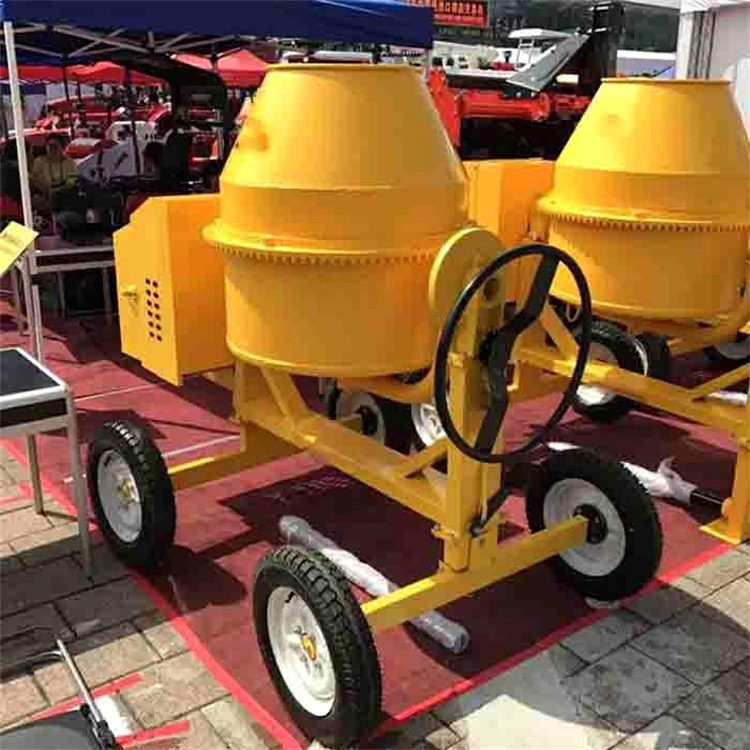
Match drum capacity to pour size and cycle time: a 500 L drum yields roughly 0.35 m³ of mixed concrete per batch. At a 4-minute cycle that is about 5 m³/h, so for 6–8 m³/h you need a 10 HP drive and for 10–14 m³/h a 35 HP water-cooled diesel unit.
Concrete mixers are sold by drum capacity, but what you actually receive per batch is the mixing capacity, which is smaller. Understanding that difference — plus how many batches per hour you need — is most of the buying decision.
Drum capacity vs mixing capacity
A drum rated at 500 L does not deliver 500 L of mixed concrete; the usable mixing capacity is lower because the drum must have room for the material to tumble. On the LY-500 Concrete Mixer, the 500 L drum gives a 400 L mixing capacity. Always quote the mixing figure when you calculate batches.
Size the mixer from demand, not from habit
- Work out hourly demand. How many cubic metres of concrete does the pour need, and over how many hours?
- Convert to batches. Divide demand by the mixing capacity per batch.
- Check batch cycle time. Loading, mixing and discharging take time; the drum rotation speed gives a clue to mixing behaviour.
- Compare against rated productivity, e.g. 6–8 m³/h. If the machine's rated productivity sits below your demand, the pour will wait for concrete — and cold joints are the usual result.
Power: petrol, diesel or electric
Power choice follows the same logic as for spraying machines: electric where a reliable supply exists, diesel where it does not. The LY-350 Diesel Concrete Mixer is a diesel model, which suits sites before permanent power is connected. Confirm the voltage on electric models before ordering.
Portability and site logistics
Weight and packed dimensions decide whether a mixer can be moved by your normal crew and vehicle. The LY-500 Concrete Mixer at 330 kg with a packed size of 2060 × 1060 × 1250 mm needs a plan; smaller drums are easier to relocate across several small jobs in a week.
Our concrete mixer range
| Model | Output | Pressure | Conveying height | Motor power | Hopper | Weight |
|---|---|---|---|---|---|---|
| LY-350 Diesel Concrete Mixer | - | - | - | 35 hp | - | 1800 kg |
| LY-500 Concrete Mixer | - | - | - | 10 hp | - | 330 kg |
| LY-500-DW Concrete Mixer | - | - | - | 10 hp | - | 1200 kg |
All three share the reverse-drum design principle that gives even mixing and straightforward discharge. Choose by batch size first, then by power source, then by how often you will move it.
Daily habits that extend mixer life
- Clean the drum at the end of every day before concrete sets.
- Do not overload beyond the rated mixing capacity.
- Check drum rotation is unobstructed before loading.
- Keep the power unit serviced on the manufacturer's schedule.
- Discharge promptly — leaving mixed concrete in the drum is hard on the machine and on the concrete.
Not sure which size?
Tell us the largest single pour you expect, how many hours you have for it, and what power you have. We will tell you which drum size covers it with margin.
Standards behind the numbers
A concrete mixer is specified against the concrete it has to produce, and that concrete is specified against a standard.
- EN 206 is the European standard for concrete specification, performance, production and conformity. It is the document that defines the concrete your mix design is aiming at, and therefore the batching accuracy and mixing consistency the mixer must deliver.
- EN 1015 is the test-method family for masonry mortar, relevant where the mixer is producing mortar rather than structural concrete — a common dual use for drum mixers on rendering projects.
- ASTM C94 covers ready-mixed concrete and is the reference point most North American specifications quote against; where concrete is batched on site rather than delivered, the same performance requirements apply to the mix.
- EN 60204-1 applies to the machine's electrical system on electric models.
In practice the standard tells you the required performance, and the mixer's mixing capacity and cycle time tell you whether it can reach it in the time available.
What goes wrong on site
- Confusing drum capacity with mixing capacity. A 500 L drum does not deliver 500 L of mixed concrete — the drum needs room for the material to tumble. Basing a batch count on the drum figure overstates output every time.
- Sizing the mixer below the pour. If the rated productivity is under your hourly demand, the pour waits for concrete, and waiting means cold joints.
- Overloading the drum. Overloading reduces mixing quality, strains the drive and shortens drum life — and the concrete itself suffers.
- Leaving mixed concrete in the drum. Hard on the machine and hard on the concrete. Discharge promptly, then clean before the end of the day.
Frequently asked questions
Is drum capacity the same as mixing capacity?
No. The drum must have room for the material to tumble, so the usable mixing capacity is lower than the drum rating — a 500 L drum on the LY-500 gives a 400 L mixing capacity. Always calculate batches from the mixing figure, not the drum figure.
How do I size a cement mixer for a pour?
Work out hourly demand in cubic metres, divide by the mixing capacity per batch to get the number of batches needed, and check that against the machine rated productivity allowing for loading, mixing and discharging time. If rated productivity falls below demand, the pour will wait for concrete.
Should I choose a diesel or an electric cement mixer?
Same logic as for spraying machines: electric where a reliable supply exists, diesel where it does not. The LY-350 is a diesel model suited to sites before permanent power is connected. Always confirm voltage on electric models before ordering.
Need equipment for your next project?
Send us your requirement and we will recommend the right model.
Request a quotation