
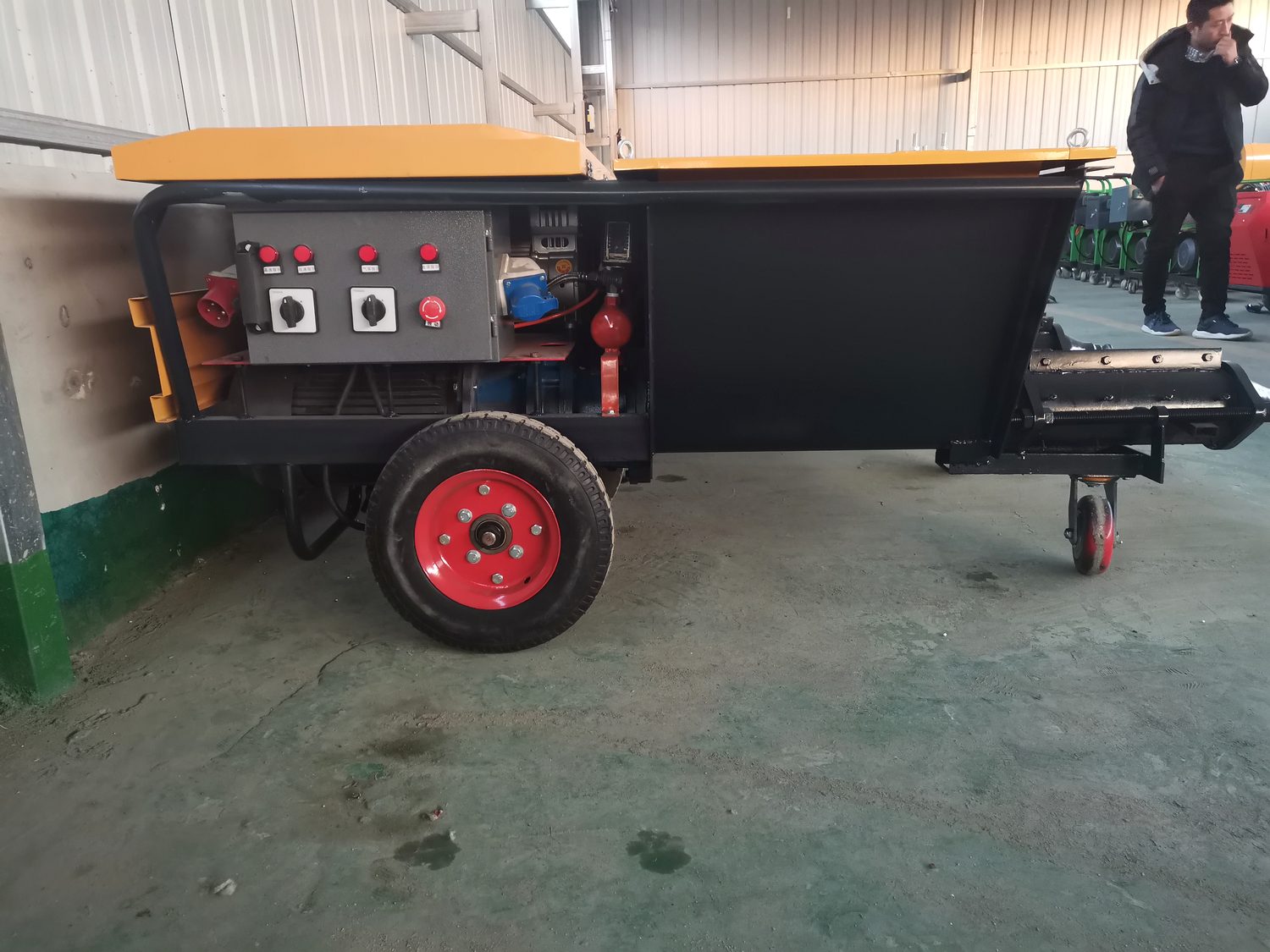
Clean a mortar sprayer within 30 minutes of finishing: flush the hose with water while the pump runs, remove and rinse the nozzle, open the ball valve and clean the seat, then rinse the hopper. Set mortar left in the hose or valve overnight and the pump will need a rebuild.
A mortar spraying machine works in one of the harshest environments on site: abrasive, alkaline material that hardens if you stop moving it. The good news is that most downtime is preventable with a routine that takes minutes.
End-of-day routine
- Stop feeding and run the hopper down. Do not leave a full hopper overnight.
- Flush the pump and hose with clean water until discharge runs clear. This is the single most important step.
- Remove and clean the nozzle. Set material in a nozzle is the most common cause of a bad spray pattern the next morning.
- Check hose couplings for wear and for material build-up that will harden overnight.
- Wipe down the exterior so splatter does not accumulate and hide a developing problem.
- Store under cover with the hopper empty and the machine on a level surface.
Weekly checks
- Inspect wear parts and replace before they fail rather than after.
- Check the electrical supply: cable condition, plug, and that the voltage matches the machine rating.
- On diesel models, follow the engine service schedule — oil, filters, air intake.
- Verify that hose length and lift on current jobs remain inside the machine's rated limits.
Spares to keep on site
A small spares kit turns a lost day into a five-minute stop:
- Spare nozzle or nozzle set
- Common wear parts for the pumping section
- Hose couplings and seals
- Cleaning brushes and a flushing adapter
Costs of skipping the routine
Material left to set in a pump or hose can require strip-down rather than a flush. That is not just a cleaning job — it is lost machine hours on a day when the crew and the material are both ready. Compared with that, ten minutes at the end of the day is inexpensive.
Specification is maintenance too
Running a machine permanently at its maximum conveying height leaves no margin for a stiffer mix and produces exactly the blockages that lead to hardened material. If your hose run is near the limit of the 311 Mortar Spraying Machine at 10 m, the 711 Mortar Spraying Machine at 20 m or the M-11 High-Lift Mortar Spraying Machine at 50 m and 100 m horizontal will simply stop the problem recurring.
Questions about a specific model?
Contact us with the model and what you are seeing, and we will point you at the right parts or procedure.
Standards and manufacturer requirements behind the routine
Maintenance is not free-form: part of it exists because the machine must remain compliant, and part because the material sets on a timetable you do not control.
- EN 60204-1 covers the electrical equipment of machines, including the condition of the supply, protection and control arrangements. Cable damage and protective-device condition are compliance items, not just maintenance preferences.
- The mortar's declared working time, published against the EN 998-1 classification for rendering and plastering mortars, tells you how long material can remain workable. It sets the real deadline for end-of-day flushing.
- EN 13914-1 for rendering and plastering, and ASTM C926 in North America, define the application requirements — a machine that is out of condition can no longer hold the specified coat thickness consistently.
Where the manufacturer's service schedule is more specific than these documents, follow the schedule. Standards set the floor, not the ceiling.
What goes wrong on site
- Leaving material in the pump over a weekend. This is the classic expensive one: hardened material requires strip-down rather than a flush, and costs machine hours on a day when the crew and material were both ready.
- Cleaning the hopper but not the hose. The hose is where material sets first and where blockages begin the following morning.
- Skipping the nozzle. A nozzle left uncleaned is the most common reason a machine sprays badly at the start of the next shift.
- Running at the specification limit. Working permanently at maximum conveying height leaves no margin for a stiffer mix, and the resulting blockages are what lead to hardened material in the machine.
- No spares on site. A nozzle and a set of wear parts turn a lost day into a five-minute stop.
Frequently asked questions
What must I do at the end of every day?
Run the hopper down rather than leaving it full, flush the pump and hose with clean water until discharge runs clear, remove and clean the nozzle, check hose couplings for wear and material build-up, and store the machine under cover with the hopper empty.
Why does my machine spray badly first thing in the morning?
Almost always a nozzle or hose that was not cleaned the previous day, so material set in it overnight. Removing and cleaning the nozzle at the end of each shift is the cheapest fix on the machine.
Which spare parts should I keep on site?
A spare nozzle or nozzle set, the common wear parts for the pumping section, hose couplings and seals, and cleaning brushes or a flushing adapter. Keeping these on site converts what would be a lost day into a short stop.
Need equipment for your next project?
Send us your requirement and we will recommend the right model.
Request a quotation