
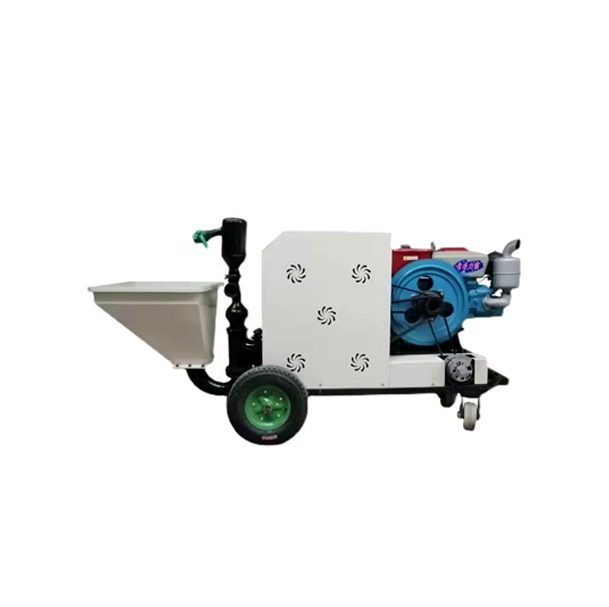
Choose electric when a 220 V or 380 V supply is available on site: lower running cost, less noise and no fuel handling. Choose diesel when power is absent, unstable or far from the work face, or when you need pressure above 5 MPa for long hose runs — the D-25 delivers 6 MPa at 200 m²/h.
Ask most buyers why they chose diesel or electric and the honest answer is usually about the site, not the machine. Electric machines are simpler and cleaner; diesel machines go where there is no grid. This guide puts the trade-offs side by side.
Where electric wins
- Indoor work. No exhaust, no fumes, no ventilation planning.
- Lower running cost. Electricity per hour is normally cheaper than diesel per hour.
- Lower noise. Important on occupied buildings and residential streets.
- Less daily maintenance. No engine oil, fuel filters or air filter servicing.
- Simpler start-up. Switch on and spray.
The condition is a supply you can rely on. Check both the voltage and the phase, and confirm that the site supply can carry the motor's starting current alongside everything else running on site. Most of our electric machines are offered at 380 V or 220 V — ordering the wrong one is a common and easily avoided mistake.
Where diesel wins
- No grid, or an unreliable one. Remote sites, new builds before permanent power, rural projects.
- Frequent relocation. No generator to transport, no cable runs to manage.
- Voltage uncertainty. Working across regions with different standards removes the compatibility risk.
- Long hose runs and heavy duty. Diesel drives are well suited to sustained pushing.
The trade-offs are fuel logistics, higher noise, exhaust management indoors, and engine servicing.
Our diesel range
| Model | Output | Pressure | Conveying height | Motor power | Hopper | Weight |
|---|---|---|---|---|---|---|
| D-25 Diesel Mortar Spraying Machine | 200 m²/h | 6 MPa | 40 m | - | 70 L | 680 kg |
| D-800 Mortar Spraying Machine | 150 m²/h | 3 MPa | 15 / 20 m | - | 100 L | 300 kg |
| DM9-25 Diesel Mortar Spraying Machine | 200 m²/h / 4–6 m³/h | - | 40 m | - | 85 L | 720 kg |
The D-25 Diesel Mortar Spraying Machine is the heavy-duty option in the range, rated at 200 m²/h with 6 MPa and 40 m of lift — suited to large exterior jobs where both output and reach matter. The D-800 Mortar Spraying Machine and DM9-25 Diesel Mortar Spraying Machine cover smaller and mid-size diesel requirements. All three remove the dependency on site power entirely.
A decision rule that works
Answer two questions:
- Do you have reliable power on every site you will use this machine on? If yes and the work is mostly indoor, buy electric.
- Do you regularly work before permanent power is connected, or move sites weekly? If yes, buy diesel.
If you answered yes to both, many contractors end up running one of each: an electric machine for occupied interiors and a diesel machine for early-stage and remote work.
Questions worth asking before you order
- What is the maximum height and hose distance on your typical job?
- Is the material bagged on site or mixed by machine?
- Do you need to work indoors with poor ventilation?
- Who will service the engine, and how often can they do it?
Send us those answers and we will recommend a specific model rather than a category.
Standards and site requirements behind the choice
The diesel-versus-electric decision is really a question about two things: the electrical installation available on site, and the application standard the work must meet.
- EN 60204-1 is the electrical-equipment-of-machines standard, covering the supply, protection and control arrangements of machine electrical systems. It is the reason a supplier asks about supply voltage, phase and protective devices rather than just the motor rating.
- Application standards — EN 13914-1 for rendering and plastering, ASTM C926 in North America — set the substrate and curing requirements. An indoor application that requires ventilation or controlled drying can effectively rule out a diesel unit on air-quality grounds before output is even discussed.
- Local emissions and site rules are not international standards but are often decisive: many occupied-building refurbishment contracts prohibit combustion engines indoors regardless of specification.
Check the supply first, then the site rules, then compare output. Most wrong choices are made in that order reversed.
What goes wrong on site
- Buying electric for a site with no reliable three-phase supply. The machine arrives, the supply cannot carry the motor's starting current alongside other loads, and the machine sits idle.
- Buying diesel for indoor work. Exhaust management in an occupied or poorly ventilated building is often prohibited by contract, not just discouraged.
- Assuming diesel is always the more powerful option. Reach and pressure, not the fuel type, determine what a machine can do. Compare conveying height, distance and pressure across both groups.
- Forgetting the service side. Diesel adds engine oil, fuel and air filter servicing. If nobody on site can do that on schedule, reliability suffers in a way the purchase price never showed.
Frequently asked questions
Should I buy a diesel or an electric mortar sprayer?
Decide by site power and site rules first. If you have a reliable supply on every site you will use it on, and most work is indoors, choose electric. If you regularly work before permanent power is connected, or move sites weekly, choose diesel.
Is a diesel machine more powerful than an electric one?
Not by definition. What a machine can do is set by its conveying pressure, conveying height and conveying distance, all of which are specified per model regardless of fuel type. Compare those figures across both groups rather than assuming diesel means more capability.
What electrical details do I need to confirm before ordering?
Supply voltage (for example 380 V or 220 V), number of phases, and whether the supply can carry the motor starting current alongside other site loads. Machine electrical systems are covered by EN 60204-1, which is why supply and protection details are requested before an order is confirmed.
Need equipment for your next project?
Send us your requirement and we will recommend the right model.
Request a quotation