
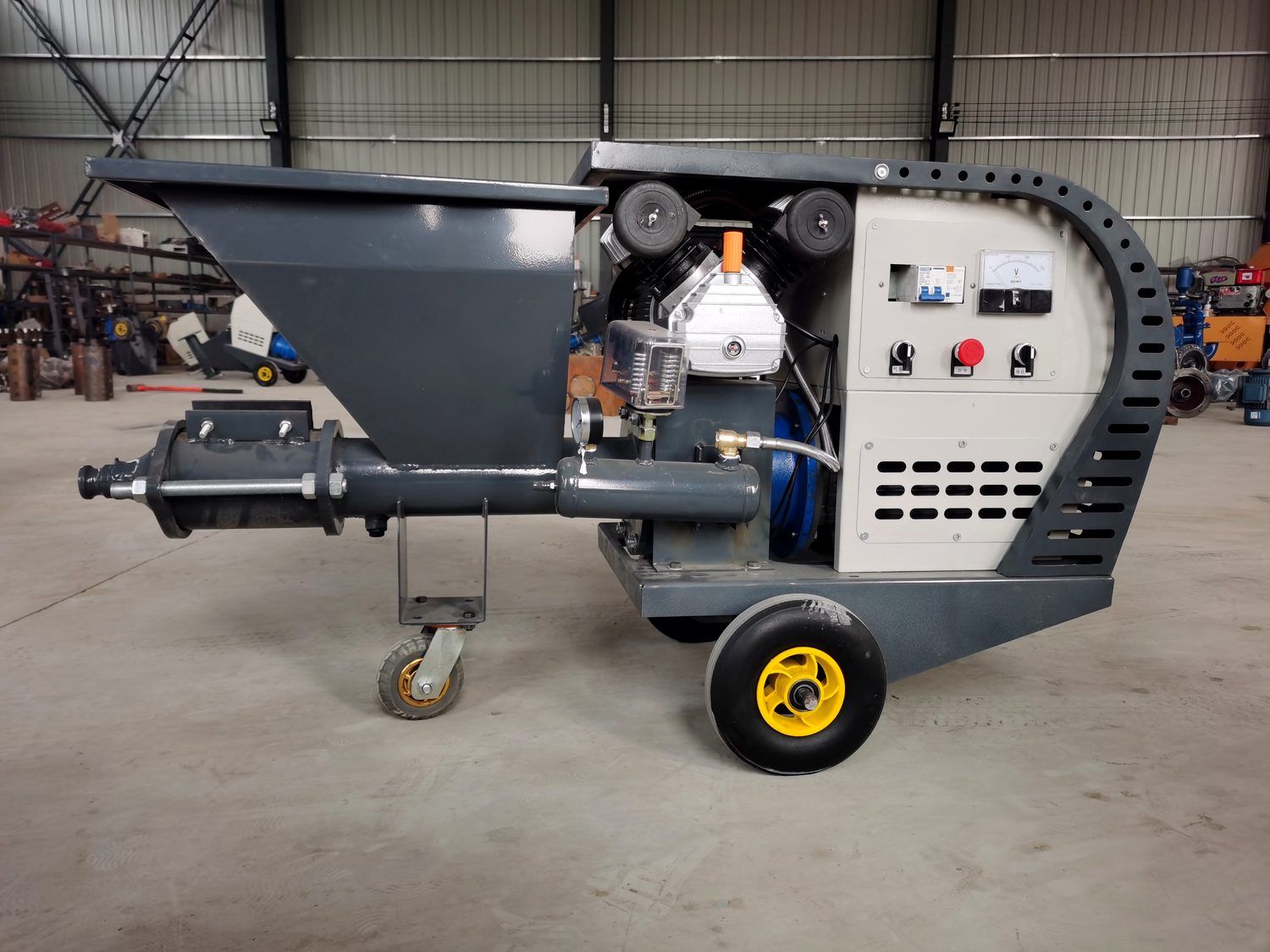
Material use follows from output and coat thickness: volume per hour equals output in m²/h multiplied by coat thickness in metres. At 80 m²/h and a 10 mm coat, a 417 sprayer consumes 0.8 m³ of mortar per hour, or roughly 1,400 kg of dry mix at a 1,750 kg/m³ density.
Rated capacity tells you what a machine can do under test conditions. What you need for pricing and scheduling is what it will do on your site. This guide gives a simple method to convert one into the other, and to size the machine from the answer.
Step 1: Measure the real area
Measure the surfaces to be sprayed and subtract openings. For walls, area is width × height. For ceilings, length × width. Do not forget reveals and soffits — they are slow to spray and are regularly missed in estimates.
Step 2: Convert area to material volume
Material volume = area × thickness. A 15 mm render over 500 m² is 500 × 0.015 = 7.5 m³ of wet material. Add a wastage allowance — overspray, hose residue and start-up waste are unavoidable, and a few percent is normal.
Step 3: Apply a realistic efficiency factor
This is the step most estimates skip. Published output such as 150 m²/h assumes a full hopper, a short hose, no repositioning and no waiting for material. On site, effective output is a fraction of that, because:
- the machine waits while the hopper is refilled,
- the operator moves scaffolding, hoses and material,
- surface preparation and masking interrupt spraying,
- finishing (ruling, floating, smoothing) proceeds at human speed regardless of how fast material is applied.
Take the rated figure as a ranking tool, then plan your programme at a conservative fraction of it. If your crew is new to machine plastering, be even more conservative for the first week.
Step 4: Check the machine against the hose run, not just the area
A machine can hit its area target and still fail the job if it cannot push material far enough. Check the maximum conveying height and horizontal distance. The 311 Mortar Spraying Machine is rated to 10 m and 15 m; the M-11 High-Lift Mortar Spraying Machine to 50 m vertical and 100 m horizontal. If your requirement is close to a limit, choose the next model up — running a machine at its maximum leaves no margin for a cold morning or a stiffer mix.
Step 5: Decide how the hopper will be fed
Material supply, not machine capacity, is the usual bottleneck. Estimate how many litres per hour your target output consumes, then compare it with hopper volume. A 130 L hopper on the 711 Mortar Spraying Machine gives noticeably longer spraying intervals than a 50 L hopper on the 311 Mortar Spraying Machine. If you are hand-bagging material, either accept more stops or pair the sprayer with a LY-500 Concrete Mixer so supply keeps pace.
Worked example
Interior plastering, 800 m² of wall, 15 mm thickness, two-storey building with a 6 m lift and 20 m hose run:
- Wet material: 800 × 0.015 = 12 m³ plus wastage allowance.
- Height: 6 m — comfortably within the 10 m rating of the 311 Mortar Spraying Machine and the 20 m rating of the 711 Mortar Spraying Machine.
- Choice: for a crew finishing 800 m² over several days, the 511 Mortar Spraying Machine (150 m²/h) is a balanced choice; for a larger crew compressing the programme, the 711 Mortar Spraying Machine with its larger hopper reduces refill stops.
What to send a supplier
Total area, thickness, number of storeys, maximum hose run, available power and how you plan to feed the machine. With those six facts we can recommend a specific model and tell you what daily output to plan for.
Standards and data you can lean on
Two numbers in every estimate have to come from outside the machine datasheet, and both have a standard behind them.
- Coat thickness is specified, not chosen. EN 13914-1 sets out the design and application requirements for external rendering and internal plastering, and it is the document that determines the wet and dry thickness your estimate must use. ASTM C926 plays the same role on North American specifications.
- Material consumption per square metre should be taken from the mortar manufacturer's declared consumption for the declared thickness — a figure that is itself produced against the EN 1015 test family for masonry mortar. Do not estimate consumption from the number of bags you happen to have used before.
- Declared mortar performance comes from EN 998-1, which classifies rendering and plastering mortars by use and performance. It is the reason two products that look identical can have different working times and different pump behaviour.
Wastage allowance is not covered by a standard — it is site practice. Overspray, hose residue and start-up loss are unavoidable, and a few percent is normal. Base the allowance on your own records rather than on a rule of thumb.
What goes wrong on site
- Estimating from nominal thickness instead of specified thickness. If the specification calls for a two-coat system, the volume is the sum of both coats, not the finished surface figure.
- Forgetting openings, reveals and soffits. These are slow to spray and easy to leave out of a measured area, and they consume more material per square metre than flat wall.
- Planning at rated output. Rated figures assume a full hopper, a short hose and no repositioning. A schedule built on the rated number will slip in the first week.
- Running out of material mid-pour. Material arriving late forces a cold joint, which is a rework cost rather than a delay. Keep a buffer of at least one full mix batch.
Frequently asked questions
How do I convert a rated m2/h figure into a daily output?
Treat the rated figure as a ceiling measured under ideal continuous conditions, then plan at a conservative fraction of it. Real output is reduced by refilling the hopper, repositioning scaffolding and hose, surface preparation, and the fact that finishing proceeds at human speed regardless of how fast material is applied.
Where should the material consumption figure come from?
From the mortar manufacturer declared consumption for the specified thickness, not from previous bag counts. Coat thickness itself comes from the applicable application standard, such as EN 13914-1 in Europe or ASTM C926 in North America.
How much wastage allowance should I add?
Overspray, hose residue and start-up loss are unavoidable and a few percent is normal, but there is no standard figure. Base the allowance on your own site records, and separately keep a full mix batch in reserve so a late delivery does not force a cold joint.
Need equipment for your next project?
Send us your requirement and we will recommend the right model.
Request a quotation